
Guidance here will help you to develop reliable and sustainable use of teach-back.
Use these resources to get to Always.
Getting to Always: Beginning
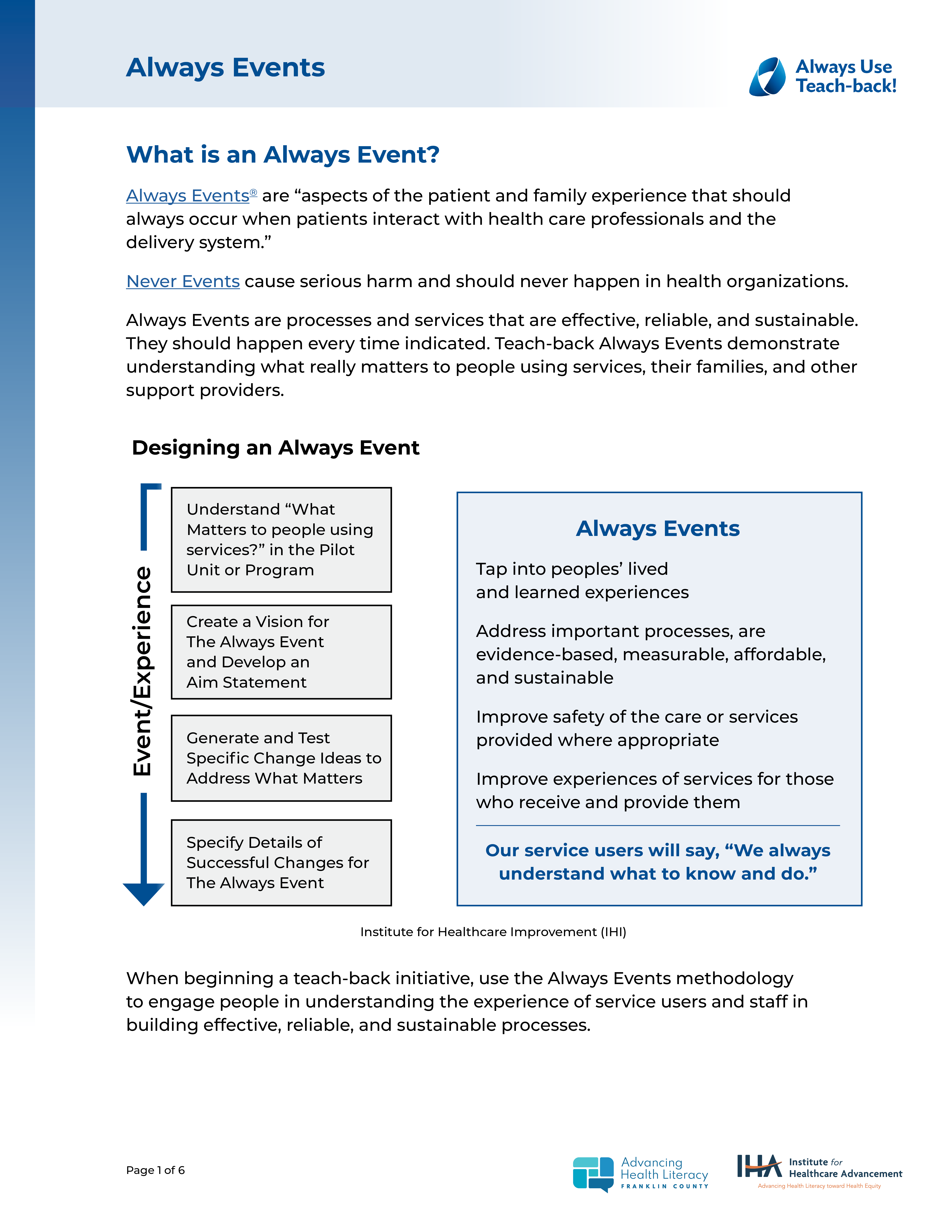
- Learn how Teach-back Always Events enable assessing and assuring understanding what really matters to those receiving care and using services. Click here to download.
- Guidance for getting started and engaging stakeholders for a successful teach-back initiative.. Click here to download.

- Examples of Team Aims, Goals, and Objectives: Clinical and Non-Clinical. Click here to download.

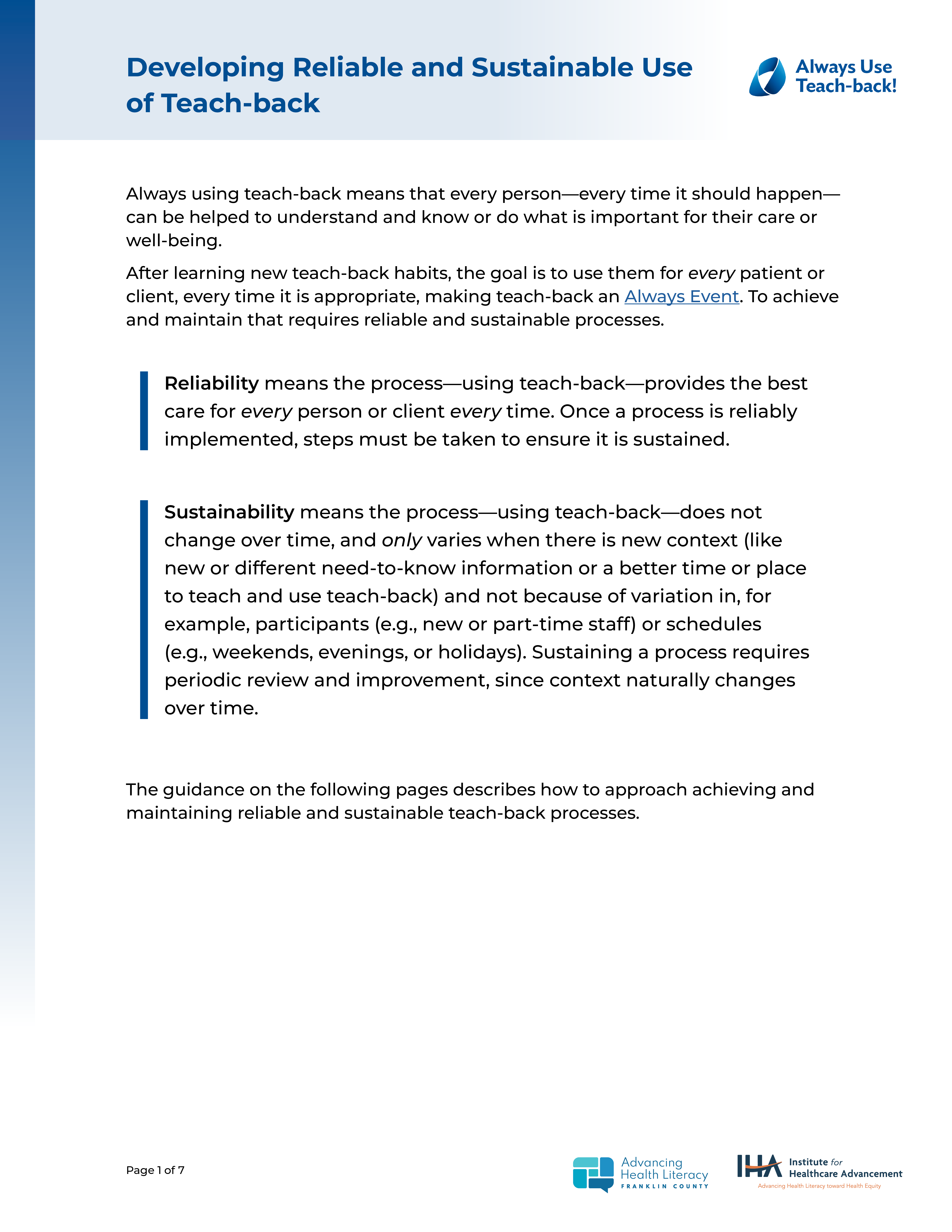
- It is important to be aware of what is needed for reliability and sustainability at the outset. Use this guidance for developing teach-back Always Events to address important processes that are evidence-based, measurable, affordable, reliable, and sustainable. Click here to download.
- Approaches for establishing and using measures to achieve effective, reliable, and sustainable use of teach-back. Click here to download.

- Having a senior sponsor’s or leader ‘s support helps spread the importance of your teach-back initiative to others to address barriers and accelerate progress and success. Click here to download.

- It takes coaching to help people change from long-standing habits of explaining then asking yes-or-no questions like “Do you have any questions?” to using teach-back to assess and assure understanding via the person’s own words. Click here to download.

- Engaging people about their lived and learned experiences enables best practices. Click here to download.

- Guidance to initiative teams for engaging stakeholders (staff and users of care and services) to help understand what is important to and what gets in the way of adding teach-back to daily work. Click here to download.

Getting to Always: Methods and Tools for Sustainability
- An example of a teach-back Plan-Do-Study-Act (PDSA) - an iterative, four-stage problem-solving model used for improving a process or carrying out change. Click here to download.

- Here’s a tool for planning, conducting, and analyzing a Plan-Do-Study-Act (PDSA) - an iterative, four-stage problem-solving model used for improving a process or carrying out change. Click here to download.

- A tool for teaching and reminding staff about how to do teach-back effectively and why the steps are important. Click here to download.
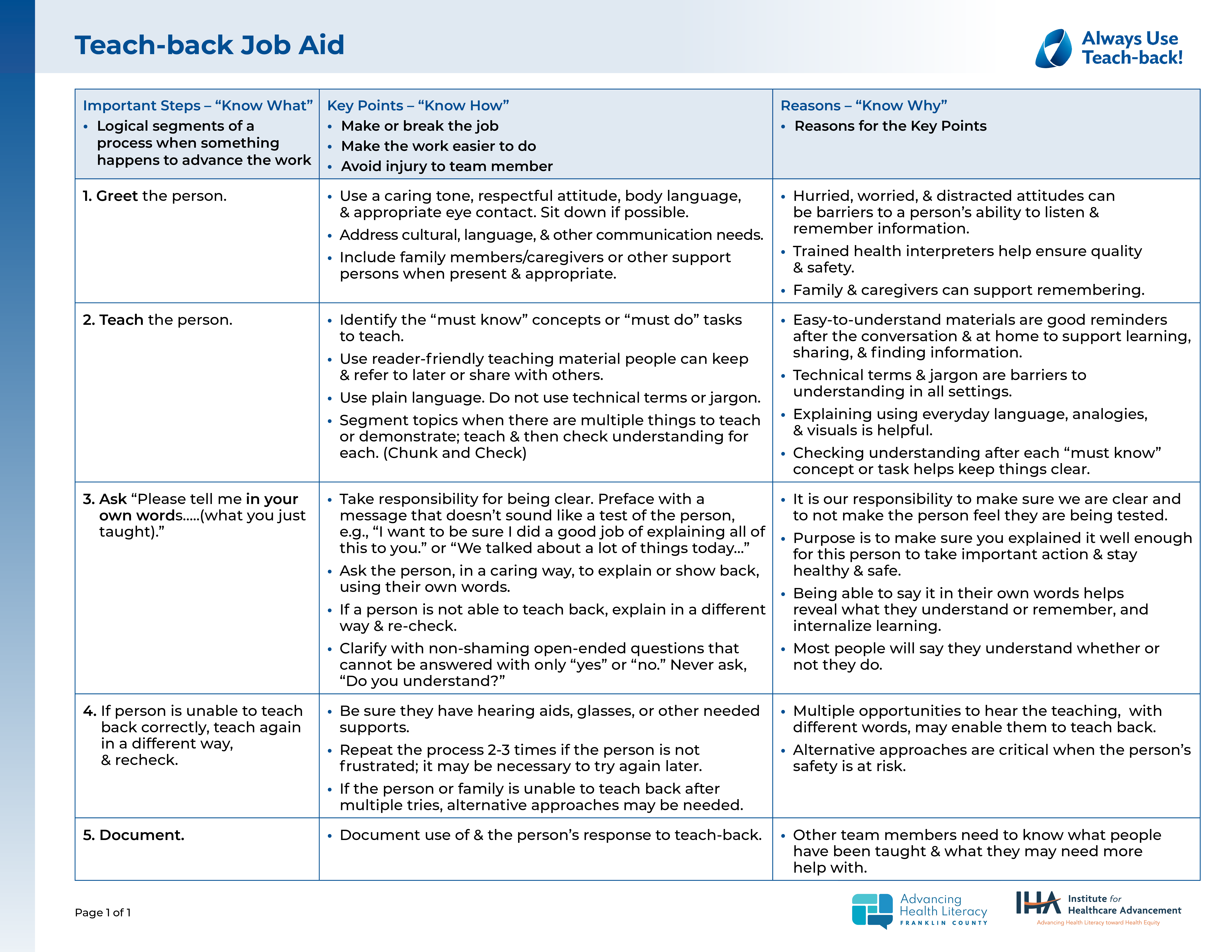
- Details for the essential 10 elements for using teach-back effectively. Click here to download.

- One of the 3 vital Elements: Using words to show you are taking responsibility for being clear is essential to teach-back and fosters a non-shaming environment. Click here to download.

- One of the 3 vital Elements: Asking the person, in a caring way, to explain back (or show back), using their own words what was taught helps reveal what they understand or remember. Click here to download.

- One of the 3 vital Elements: When someone cannot teach back, it is important to re-explain differently and check for understanding again. If they cannot teach back after several attempts, different support or an alternative plan of care may be needed. Click here to download.

- Describes various ways to use the Teach-back Observation Tool 2.0. Click here to download.

- A tool to assess use of teach-back for various purposes, like self-reflection, providing feedback on strengths of and opportunities for improving performance, and assessing competence. Click here to download.

- A tool to assess use of teach-back for various purposes, like self-reflection, providing feedback on strengths of and opportunities for improving performance, and assessing competence with suggested scoring criteria. Click here to download.

- Policies and procedures create the infrastructure to support reliable use of teach-back and to sustain it over time. Click here to download.

Our patients and service users will say, “We always understand what to know and do.”
Always Events. Starting a Teach-back initiative Aims, Goals, and Objectives Developing Reliable and Sustainable Use of Teach-back Measures for Reliable, Sustainable Teach-back Engaging Senior Leaders or Sponsors Coaching for Always Using Teach-back Engaging Patients and Clients Ask What Matters to You PDSA Example PDSA Template Teach-back Job Aid 10 Elements for Using Teach-back Effectively - Detail Use Words to Show You Are Taking Responsibility for Being Clear Ask the Person to Explain Back in Their Own Words When People Cannot Teach Back Accurately Teach-back Observation Tool 2.0 - Consideration for Use Teach-back Observation Tool 2.0 Teach-back Observation Tool 2.0 with Scoring Guidance Writing Policies